Bipolar Transistor Applications in Electronic Circuits
Explore the pivotal role of bipolar transistors in modern electronic circuits, focusing on specifications, applications, and selection tips for engineers and procurement professionals.
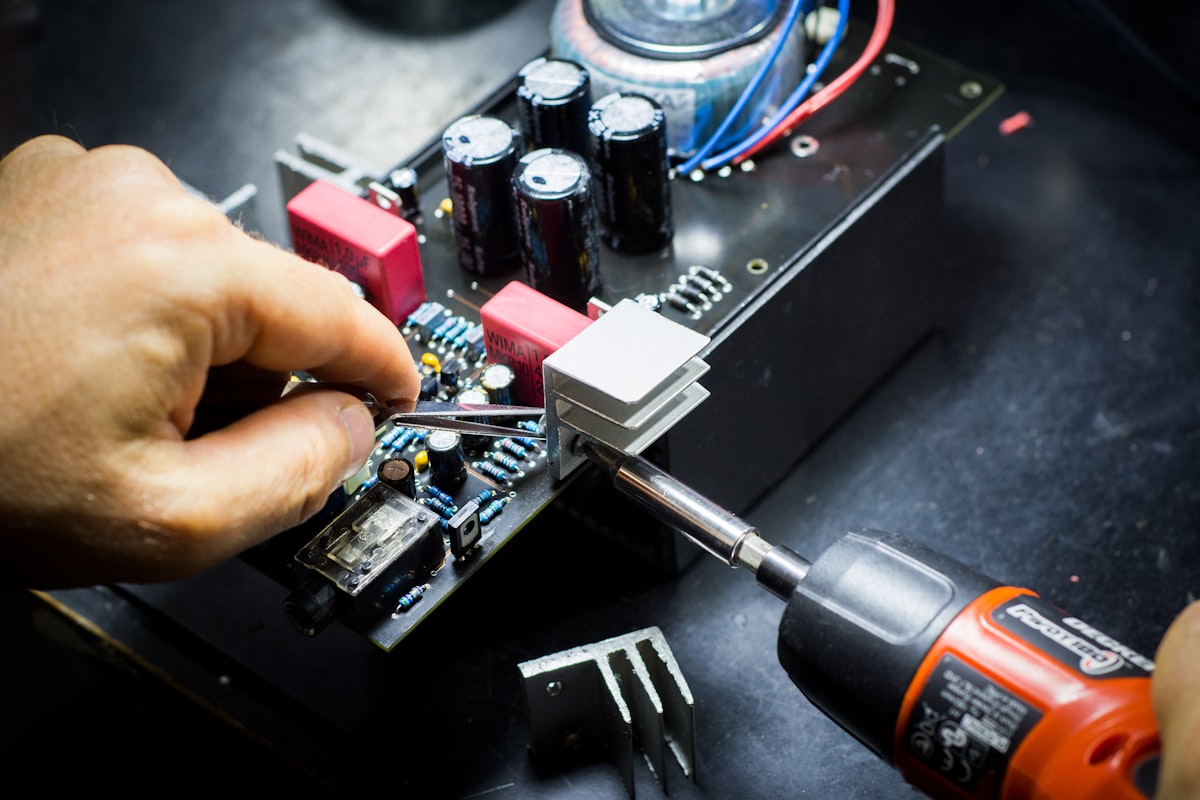
Introduction to Bipolar Transistors
Bipolar transistors are fundamental components in electronic circuits, functioning as amplifiers and switches. These semiconductors are vital in a plethora of applications, from small-signal amplification in audio equipment to high-power control in industrial systems. Understanding their specifications, variants, and applications can significantly impact the design and efficiency of electronic systems.
Key Specifications and Parameters
When selecting a bipolar transistor, it's important to consider several key specifications:
- Current Gain (β): Ratio of output current to input current, typically ranging from 20 to 1000.
- Collector-Emitter Voltage (VCE): Maximum voltage the transistor can withstand between collector and emitter, generally between 20V to 1000V.
- Collector Current (IC): Maximum current through the collector, often between 100mA to 10A.
- Power Dissipation (PD): Maximum power the transistor can dissipate, usually specified in watts.
| Parameter | Value Range | Units | Notes |
|---|---|---|---|
| Current Gain (β) | 20 - 1000 | - | Varies with type and application |
| VCE (max) | 20 - 1000 | V | Depends on breakdown voltage |
| IC (max) | 0.1 - 10 | A | Consider load requirements |
| PD | 0.5 - 150 | W | Check thermal management |
Formulas and Calculations
Understanding the basic calculations for bipolar transistors is crucial for effective circuit design. For instance, the relation between base current (IB), collector current (IC), and emitter current (IE) is given by:
IE = IB + IC
The current gain (β) is calculated as:
β = IC / IB
Types and Variants Comparison
Bipolar transistors are broadly categorized into NPN and PNP types. Their selection depends on the specific requirements of the circuit.
| Type | Polarity | Common Applications | Advantages |
|---|---|---|---|
| NPN | Negative-Positive-Negative | General-purpose amplification, switching | Higher electron mobility, faster operation |
| PNP | Positive-Negative-Positive | Motor controls, power applications | Better suited for high-side switches |
Application Examples
Bipolar transistors are employed across various fields:
- Audio Amplification: Used in amplifiers to boost audio signals for speakers.
- Switching Regulators: In power supplies for converting DC voltage levels efficiently.
- Signal Modulation: In communication devices for modulating signals.
- Motor Drives: Control the power delivered to motors in industrial applications.
Selection Guide
Choosing the right bipolar transistor involves evaluating several factors. Start by defining the application requirements such as the required current and voltage ratings. Consider the gain bandwidth product if frequency response is critical. Always ensure that the transistor's maximum ratings exceed the application's operational conditions to account for transients and variations.
Quality and Sourcing Tips
Ensuring quality in sourcing bipolar transistors is paramount. Check for compliance with industry standards such as IEC and JEDEC. Verify the authenticity of components by sourcing from reputable distributors like misemicon.com. Always request a certificate of compliance and perform quality checks on samples before bulk purchases. Consider suppliers who offer robust support and warranties.
FAQ
- What is a bipolar transistor? A semiconductor device used for amplification and switching.
- What are the main types of bipolar transistors? NPN and PNP.
- What determines a transistor's suitability for high-frequency applications? The gain bandwidth product.
- How do I ensure the transistor won't overheat? Use appropriate heat sinks and ensure proper thermal management.
- Can bipolar transistors be used in digital circuits? Yes, they can function as switches in digital logic circuits.
- How do I measure a transistor's current gain? By calculating the ratio of collector current to base current.
- What role does VCE play in transistor operation? It's the maximum voltage the transistor can handle between collector and emitter.
- Are there any environmental considerations for using bipolar transistors? Yes, ensure they are used within specified temperature ranges.
Conclusion
Bipolar transistors remain a cornerstone in electronic design, offering versatility in amplification and switching applications. By understanding their specifications, types, and real-world applications, engineers and procurement professionals can make informed decisions that enhance the performance and reliability of electronic systems. For quality sourcing, rely on trusted distributors like misemicon.com.